The demand for certified crane operators continues to grow nationwide, driven by major infrastructure upgrades, expanding energy production, and the need for large-scale manufacturing. Skilled operators are essential for lifting, moving, and positioning materials that are too heavy or complex for other types of equipment.
Employers consistently seek operators who have completed formal training and earned their certifications. Institutions such as Heavy Equipment Colleges of America (HEC) prepare students for safe, efficient crane operation and long-term career growth. We’ll go over the top industries for crane operator jobs so that you can pick the right one for your interests.
Why Crane Operators Are In Demand?
Cranes are critical to industries that lift, transport, or install heavy materials. As infrastructure expands, the need for certified operators has increased dramatically.
Several factors contribute to current and future job demand:
- Safety Requirements: Crane operation involves heavy loads, height exposure, and complex rigging. Trained operators reduce the risk of accidents and equipment failures.
- Technical Complexity: Modern cranes rely on hydraulic systems, computerized controls, and precise load calculations. Certified crane operators learn how to operate these pieces of machinery safely and efficiently.
Many industries need operators trained on specific crane types, such as tower cranes, overhead cranes, lattice boom cranes, or mobile hydraulic cranes. Training through accredited programs, such as those offered at Heavy Equipment Colleges of America, helps students develop the skills needed to operate these cranes confidently.
Build a Strong Future in Heavy Equipment Operation
Train to Operate Cranes Safely and Confidently
Real-World Experience | Expert Instructors | Career-Focused Training
Enroll in Our Crane Operator Program Today!
Start Enrollment ProcessFind The Right Location For YouIndustries That Rely on Skilled Crane Operators
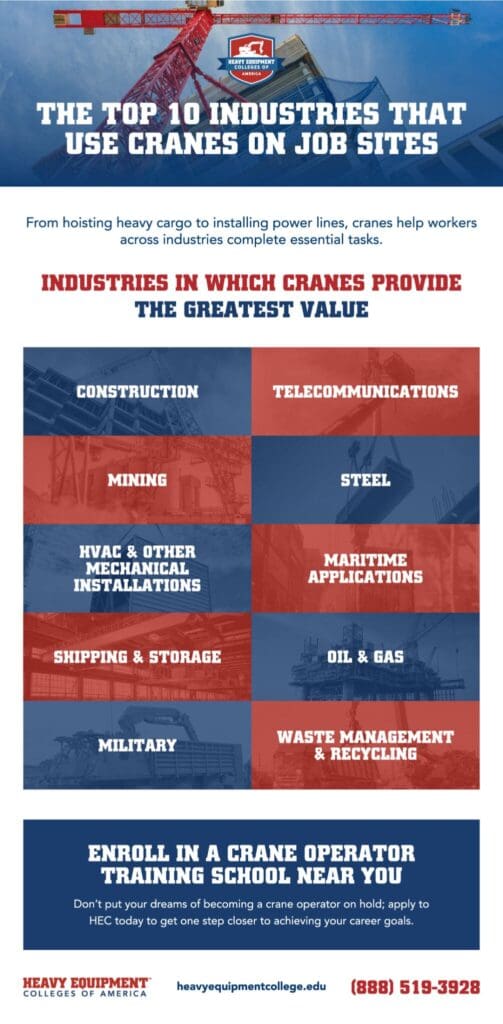
1. Construction
Construction is one of the largest employers of crane operators. Cranes play a central role in lifting steel beams, building panels, roofing materials, and HVAC systems during all phases of residential, commercial, and civil construction.
Common tasks include:
- Hoisting structural components for high-rise buildings
- Lifting prefabricated materials into position
- Assisting with bridge and roadway construction
- Operating tower cranes for long-term urban projects
2. Energy & Utilities
Manufacturing plants, steel mills, and fabrication facilities rely on overhead cranes to handle massive loads and maintain production schedules. Operators move raw steel, coils, molds, machinery, and completed components throughout the facility.
3.Mining
The energy sector depends heavily on cranes for installation, maintenance, and large equipment movement.
This often includes:
- Oil and Gas: Hoisting drilling pipes, mechanical systems, and heavy rig components on offshore and onshore sites.
- Wind Energy: Lifting and assembling tower sections, nacelles, and blades—often hundreds of feet above the ground.
- Power Plants: Installing boilers, generators, massive cooling units, and other infrastructure components.
4. Maritime, Ports, and Shipping
Ports and shipyards rely on cranes to move heavy cargo and bulk materials between vessels, transport vehicles, and storage yards. Operators manage:
- Gantry cranes for container handling
- Dockside cranes for unloading ships
- Mobile cranes for ship repair and equipment placement
5. Mining & Extraction
Mining operations rely on cranes to move equipment, lift heavy materials, and support large-scale excavation work. Operators help transport ore, machinery, and oversized components across rugged or confined environments.
6. Telecommunications
The telecommunications industry uses cranes to install and maintain communication towers, antennas, and structural components. As cell networks expand and 5G infrastructure grows, operators assist with:
- Lifting tower segments during installation
- Positioning antennas and signal equipment
- Supporting maintenance and repairs at elevated heights
7. HVAC & Mechanical Installations
HVAC companies rely on cranes to lift commercial air conditioning units, boilers, and mechanical systems onto rooftops or into equipment rooms. Operators must:
- Navigate tight urban job sites
- Coordinate lifts with mechanical crews
- Position large equipment accurately without damaging structures
8. Waste Management & Recycling
Recycling centers and waste management facilities use cranes to sort, lift, and reorganize heavy or oversized materials. Scrap yards, metal processing centers, and waste transfer stations depend on operators for:
- Moving bulk scrap metal
- Handling hazardous materials
- Operating magnetic or grapple-equipped cranes
9. Military & Defense
The military uses cranes for construction, logistics, and the movement of heavy equipment. Some bases also rely on specialized all-terrain or tactical cranes designed for remote or high-security environments. Crane operators support:
- Building hangars, warehouses, and infrastructure
- Loading and unloading military vehicles
- Moving armored equipment or aircraft components
10. Transportation: Rail & Automotive
Railway and automotive manufacturing facilities benefit from overhead cranes designed to move heavy components through the production process. Crane operators manage:
- Railcar frames, wheels, and mechanical assemblies
- Automotive engines, stamped parts, and chassis components
- Material delivery along manufacturing lines
11. Aerospace & Aviation
Aerospace assembly requires precision lifting due to the size and complexity of aircraft components. Aviation facilities also use cranes to assist with aircraft maintenance, inspections, and large-scale repairs.
Crane operators typically help with:
- Engine installation
- Fuselage positioning
- Lifting wings, landing gear, and major structural sections
Why Crane Operator Training Is Important?
Proper Training
Crane operator training introduces students to the primary functions, features, and operational requirements of different crane types. Operators learn essential topics such as load capacities, pre-operation inspections, maintenance procedures, overhead hazard awareness, and how to manage or postpone a lift when conditions become unsafe.
Specialization
Each crane type presents unique controls, load behaviors, and operational challenges, and OSHA requires operators to be certified for the specific crane types they intend to use. Programs at Heavy Equipment Colleges of America provide targeted instruction that helps students build the skills and knowledge needed to pursue these certifications with confidence.
Safety
Proper education reduces the frequency and severity of common crane-related incidents, including tipping, crushing, mechanical failures, and accidental load releases. Well-trained operators are better equipped to follow safety protocols, recognize potential hazards, and prevent equipment damage.
Career Advancement
Employers value crane operators who demonstrate technical competency, strong safety awareness, and hands-on training experience. Completing a reputable training program and earning crane certification signals to employers that a candidate knows what they’re doing when they step into the cabin. A strong training foundation also supports future career advancements into supervisory roles, specialized crane operations, or training and inspection positions.
Career Outlook & Opportunities
Crane operator jobs continue to grow across several major sectors. Expanding infrastructure projects, renewable energy development, manufacturing advancements, and increased investment in transportation systems all contribute to this rising demand.
Career opportunities include:
- Energy and utilities roles, with strong growth in wind turbine installation and power plant maintenance
- Construction jobs, supported by nationwide infrastructure improvements
- Manufacturing and industrial positions, especially in steel, automotive, and aerospace facilities
- Specialized career tracks, such as military logistics or large-scale port operations
The field offers long-term stability, competitive wages, and a clear path for professional development. With experience, crane operators may advance into supervisory roles, equipment inspection, safety compliance, or instructor positions.
Become a Certified Crane Operator with Heavy Equipment Colleges of America
A career as a certified crane operator offers a strong job outlook, competitive earning potential, and opportunities across some of the nation’s most essential industries. With the proper training, students can build the foundation for a stable and rewarding future in the heavy equipment field.
For individuals looking for crane operator jobs, Heavy Equipment Colleges of America (HEC) offers comprehensive equipment training programs designed around real-world training and industry standards, including:
Our students learn through hands-on instruction, simulation-based practice, and guided coursework that prepares them for certification exams. Apply online and take the first step towards a successful career as a crane operator.
Start Your Crane Operator Career With Confidence
Kickstart Your Crane Operator Journey Today!
Hands-On Training | OSHA-Compliant Courses | Job-Ready Skills
Become a Certified Tower Crane Operator Today!
Start Enrollment ProcessFind The Right Location For You