HEC Powerline Program
On This Page:
Start Your Journey In The Powerline Industry
Most people don’t volunteer to step into the dark. But if you’ve landed on this page, you’re not most people. Powerline work is not for the faint of heart. It’s blunt, demanding, and unforgiving.
It includes long nights, tough climbs, and decisions that matter. But it’s also the kind of work that keeps families warm, keeps cities alive, and proves what you’re really made of.
At Heavy Equipment Colleges of America (HEC), the HEC Powerline Program is for those who run toward the blackout, not away from it. The ones who don’t just answer the call, but become the reason the world can keep shining. We equip students with the foundational knowledge, field skills, and safety certifications required to begin working in this high-demand industry.
Overview
- Locations: Georgia
- Program Length: 11 Weeks or 15 Weeks with CDL
Our Powerline Program is an intensive 11-week or 15 weeks with CDL program designed to prepare individuals for a career in the electrical utility industry. Training takes place at our Georgia campus and emphasizes components of the T&D PowerSkills curriculum, one of the nation’s leading powerline-specific training curriculum used by major power companies.
Aligned with T&D PowerSkills (TDPS) standards, this program covers essential skills, including pole planning, rigging, transformer installation, and power line troubleshooting. Students are exposed to a solid foundation in electrical theory, overhead and underground distribution systems, and live-line maintenance procedures.
When you enroll, students receive:
- Instruction in electrical theory and distribution systems
- Field-based climbing and rigging experience
- OSHA 10-Hour Electrical Transmission & Distribution Construction Safety Training
- Practical exposure to overhead and underground systems
- Resume and interview support, as well as employer networking
HEC Powerline Curriculum Buckets
At HEC, we lay out our curriculum into five core training areas that mirror the responsibilities of working lineworkers. These foundational principles include:
1. Electrical Foundations & System Basics
Understanding how electricity moves through the grid is essential for safe and effective linework. Students begin with foundational instruction in electrical theory and system design.
Includes: Electrical theory, AC fundamentals, system components, and T&D overview
2. Line Construction & Maintenance
Students are taught how overhead and underground systems are built, maintained, and repaired. Hands-on practice reinforces safe and accurate execution of installation and repair tasks.
Includes: Transmission + distribution structures, conductors, insulators, pole work, and equipment installation
3. Climbing, Rigging & Field Operations
Field performance is central to powerline work. Students practice the physical coordination and technical proficiency required for elevated and ground-level operations under faculty supervision.
Includes: Climbing, fall protection, rigging, knot-tying, load-handling, and tool use
4. Safety, Protection & Emergency Response
Safety is integrated throughout our Powerline Program. Students must complete OSHA’s 10-Hour Electrical Transmission & Distribution Construction Safety Training as part of their coursework. Our approach ensures compliance with industry standards and reinforces a safety-first mindset essential for utility operations.
Includes: Grounding, switching/tagging, PPE, hazard recognition, system protection devices, and rescue procedures
5. Substations, Equipment & System Controls
Reliable power distribution depends on properly functioning substations and control systems. Students gain exposure to the components that regulate and monitor electrical flow and a broader understanding of how transmission and distribution systems operate at scale.
Includes: Transformers, breakers, relays, voltage regulation, SCADA basics, cable work, and monitoring systems
Request More Information for the HEC Powerline Program
"*" indicates required fields
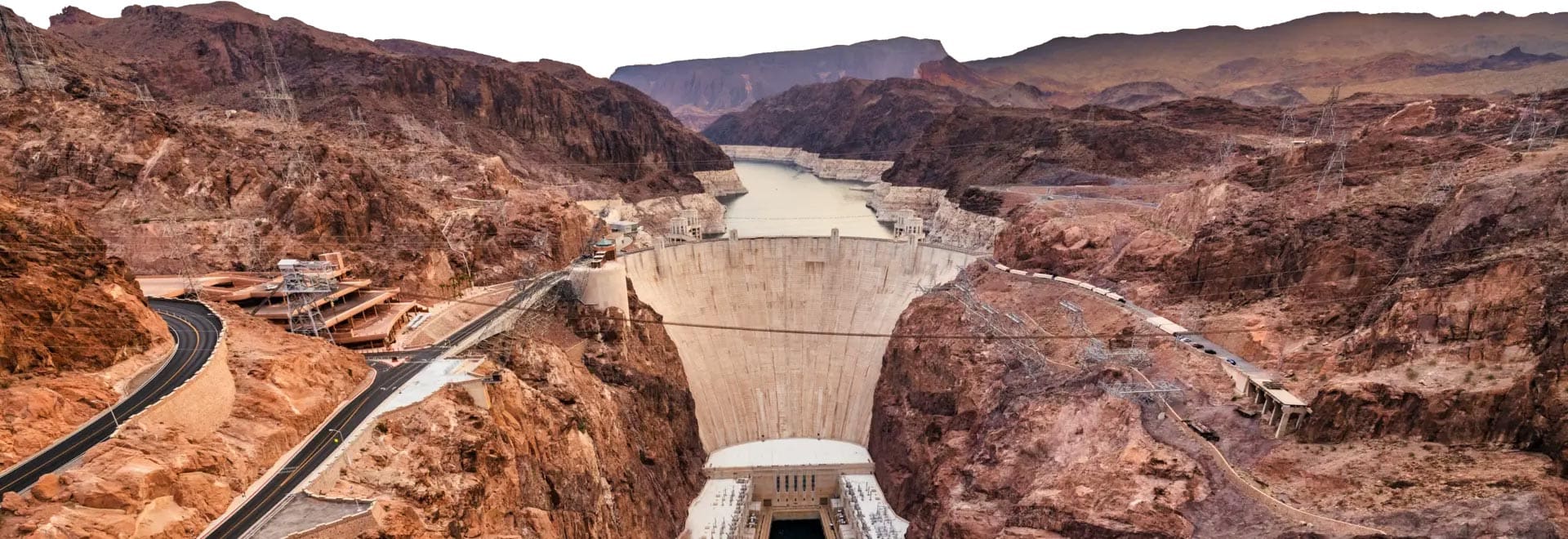
Built during the Great Depression, the Hoover Dam forever changed the landscape of the American Southwest, bringing water and power to millions. Its 1,900-foot-long Bypass Bridge, a modern marvel completed in 2010, honors that legacy and demonstrates what happens when vision, determination, and hard work come together to shape a nation.
Benefits of the HEC Powerline Program
Our HEC Powerline Program is designed to provide industry-aligned training within an accelerated timeframe.
With hands-on instruction from industry praticioners, an intensive curriculum, and real-world training, you’re not just learning a trade, you’re learning how to bring the light back when it matters most.
Hands-On Training
In this program, you won’t just watch how the job is done. You’ll do it. Students learn classroom concepts through direct application using tools, equipment, and simulated field scenarios.
Accelerated, Consolidated Format
Our 11-week and 15-week with CDL program prepares you to thrive in a fast-paced industry. Our coursework prioritizes technical proficiency, safety standards, and applied field practice.
Industry-Aligned Curriculum
Our curriculum follows nationally recognized Transmission & Distribution PowerSkills (TDPS) standards and incorporates OSHA safety training requirements. The coursework reflects procedures and safety expectations used by electrical utility providers nationwide.
What to Expect?
We structure our HEC Powerline Program to simulate the expectations and pace of the electrical utility industry. Over the course of 11 weeks or 15 weeks with CDL at our Georgia campus, students progress through technical instruction, field application, and safety training designed to prepare them for the workforce.
When you enroll, you can expect:
Structured Classroom Instruction
We introduce core electrical theory and transmission principles in a classroom setting before being reinforced through practical applications.
Hands-On Field Training
Students train with industry-relevant tools and equipment to develop climbing, rigging, and line construction skills in a controlled environment.
Safety Certification Opportunities
All students also complete the OSHA 10-Hour Electrical Transmission & Distribution Construction Safety Training as a part of the program.
Physical Skill Development
Linework requires coordination, endurance, and situational awareness. Our training emphasizes proper technique and safety compliance.
Job Readiness Preparation
We help students with resume development, interview preparation, and employer networking support for a smooth transition into the workforce.
Why Choose HEC?
At Heavy Equipment Colleges of America, we’ve built our programs around applied instruction and workforce preparation. Students get both structured coursework and practical field experience.
Our program offers:
- An accelerated 11-week format or 15-week with CDL
- Georgia-based training location
- OSHA 10-Hour Electrical T&D Safety Training
- Curriculum aligned with national TDPS standards
- Hands-on field instruction
- Career readiness and employer networking support
Career Outlook
Electrical lineworkers play a critical role in maintaining and restoring power infrastructure. Utility companies, municipalities, and energy providers rely on trained personnel to install, repair, and maintain transmission and distribution systems.
According to industry data and workforce projections, demand for skilled electrical lineworkers is expected to grow by 7% between 2024 and 2034 due to infrastructure upgrades, grid modernization efforts, and ongoing maintenance needs.
Ready to join a growing workforce with plenty of growth potential? Our Powerline Program is the first step towards a new and fulfilling career.
Stories
Every illuminated loop of the Atlanta Ferris wheel reflects the heartbeat of the city.
When night falls, and the skyline glows, the wheel becomes more than an attraction. It becomes a signal. A pulse. A reminder that even the quietest moments of wonder are powered by someone who showed up, climbed up, and kept the light alive.
Every glowing chamber of the Atlanta Aquarium shines with the power that keeps the city inspired.
Beneath the surface, where light bends through water and entire worlds come alive, nothing moves without the energy behind it. The shimmering tanks, the sparkling walkways, the living heartbeat of the ocean. All of it depends on someone who knows how to keep the currents flowing and brings the power that makes moments of wonder possible.
Financial Assistance
We offer flexible financing options for students designed to help make career preparation accessible. These include state and federal grants, as well as loans.
Reach out to our admissions department to learn more about our financial aid and what you qualify for.