
Table of Contents
If you’re looking for a career change or hoping to improve your heavy equipment skills, becoming a crane operator allows you to try something new in a growing industry. From construction and transportation to manufacturing, crane operators help move loads that other equipment can’t handle.
At Heavy Equipment Colleges of America (HEC), we want to help you succeed in your new career. This overview explores what crane operators do each day, the skills they need, the environments they work in, and how hands-on training can help prepare students for certification and career advancement.
What Is a Crane Operator?
A crane operator is a trained professional responsible for controlling lifting equipment such as mobile cranes, tower cranes, and lattice boom cranes. These machines can move heavy loads across long distances or lift materials to elevated positions. Operators work closely with riggers, signalpersons, and site supervisors to ensure safe and accurate movement of equipment and materials across a job site.
Crane operators must understand load limits, equipment capabilities, jobsite conditions, and standardized communication signals. Because every lift must be completed safely, they must follow detailed procedures and coordinate closely with other team members before and during every movement.
Build a Strong Future in Heavy Equipment Operation
Train to Operate Cranes Safely and Confidently
Real-World Experience | Expert Instructors | Career-Focused Training
Enroll in Our Crane Operator Program Today!
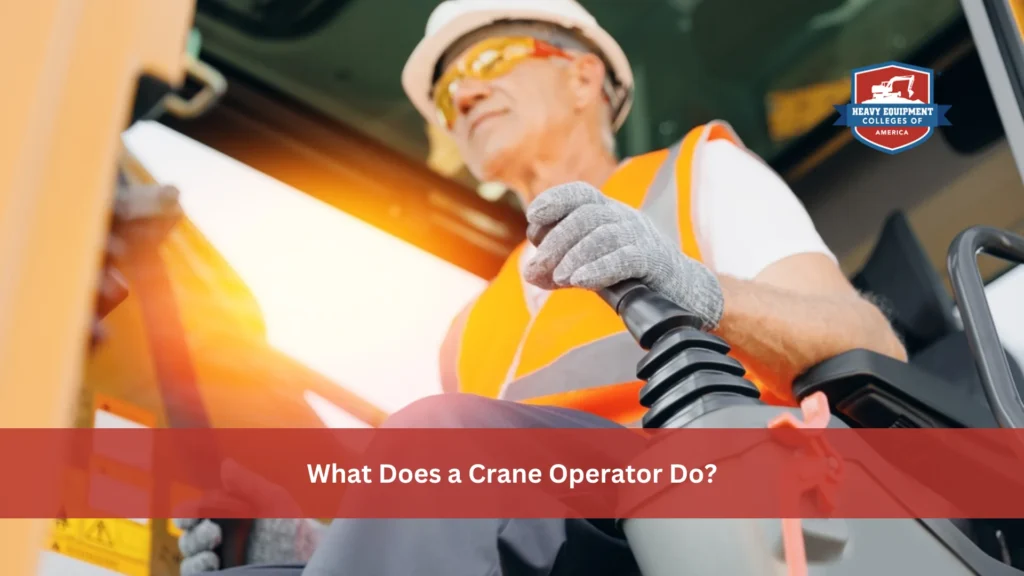
Start Enrollment ProcessFind The Right Location For YouWhat Does a Crane Operator Do?
While each work site differs, most operators complete a combination of technical, mechanical, and safety-driven tasks each day.
Core Duties and Responsibilities
- Setting Up and Inspecting Equipment: Operators perform pre-operation checks to verify that controls, safety devices, and mechanical components are in proper working condition.
- Reviewing Lift Plans: Before operating a crane, they examine load charts, site conditions, and hoisting plans to confirm that the lift can be performed safely.
- Operating the Crane: Using hydraulic controls, joysticks, pedals, or tower-mounted systems, operators lift and rotate loads with precision.
- Communicating with the Lift Team: Most movements require coordination with riggers and signalpersons who help guide load direction, boom angles, and safe positioning.
- Monitoring Job Site Conditions: Operators constantly assess environmental changes, including wind speed, visibility, and ground conditions.
- Maintaining Accurate Records: Many worksites require documentation of inspections, lift activities, and daily operation logs.
Daily Tasks on the Job
- Conducting safety checks before every shift
- Verifying rigging configurations
- Positioning the crane for optimal reach and stability
- Adjusting for weather conditions
- Completing routine maintenance tasks
- Communicating with supervisors and coworkers
- Powering down equipment and following shutdown procedures
Career Outlook for Crane Operators
The demand for crane operators remains steady across industries. Employers continue to seek trained operators due to ongoing infrastructure projects, industrial development, and expansion in the energy and manufacturing sectors.
By choosing to be a crane operator as a career, you choose a path with steady job security and plenty of opportunities to move your way up into bigger roles.
Crane Operator Skills and Education Requirements
Crane operators need a combination of mechanical knowledge, communication skills, and formal training to perform lifts safely and efficiently. Because they operate large, complex machines, employers often look for candidates who have completed hands-on education programs and earned recognized certifications.
Essential Skills
Crane operators typically develop several core skills, including:
- Mechanical Aptitude: Understanding equipment components, controls, and basic troubleshooting.
- Spatial Awareness: Accurately judging distances, load swing, clearances, and boom angles.
- Attention to Safety: Following detailed procedures and recognizing potential hazards.
- Communication: Working effectively with riggers and signalpersons to coordinate each movement.
- Problem-Solving: Adjusting lift strategies based on equipment limits, weather, or site conditions.
- Physical Stamina: Managing long shifts and maintaining focus during repetitive tasks.
These skills help operators make informed decisions, adapt to changing conditions, and ensure each lift is performed correctly.
Education and Certification Requirements
Many employers prefer crane operators who have completed a structured training program. These programs typically include:
- Formal crane operator training through an accredited institution.
- Preparation for nationally recognized certifications, such as those assessed through NCCCO-aligned exams.
- Hands-on experience with different types of cranes.
- Knowledge of OSHA safety standards, load charts, and equipment inspection procedures.
At Heavy Equipment Colleges of America, our training programs help students learn crane controls, rigging fundamentals, lift planning, and communication techniques used on professional job sites.
What Is the Workplace of a Crane Operator Like?
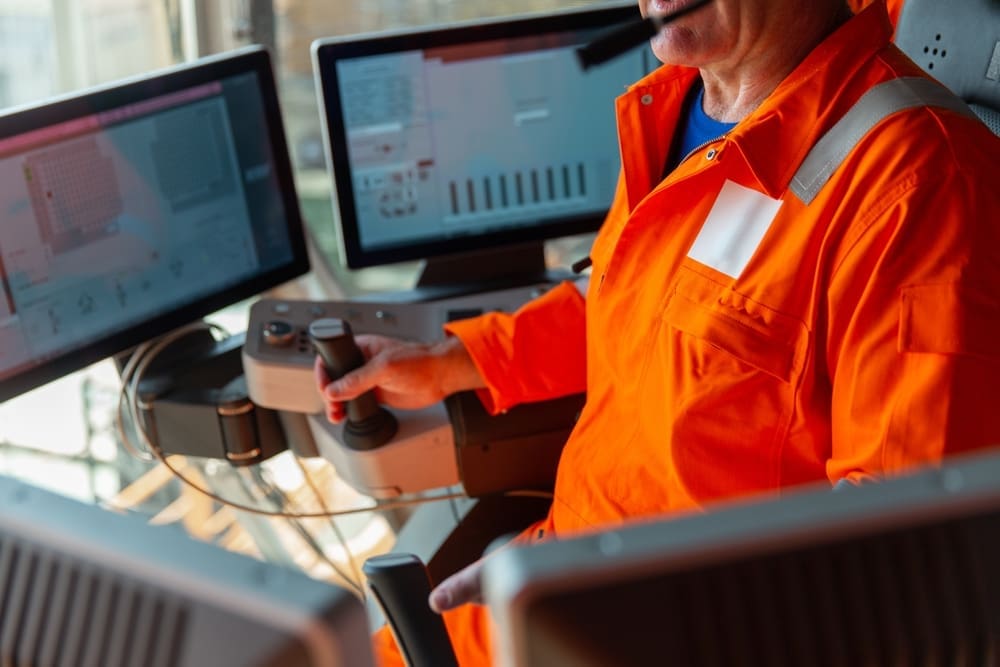
Crane operators work in a wide range of environments, depending on the industry and equipment type. These workplaces can vary significantly, but accuracy, teamwork, and safety remain central to every job.
Crane operators may work in:
- Construction environments, including infrastructure and high-rise projects
- Manufacturing facilities, moving materials, or heavy components
- Ports and shipping yards, loading and unloading cargo
- Energy and utility sectors, including wind, oil, and power generation sites
- Transportation and logistics operations, such as rail yards and distribution centers
This variety allows you to build career paths that match your interests and preferred work environments.
Typical Working Conditions
- Work may take place outdoors, at elevated heights, or inside enclosed cabs
- Operators often work full-time schedules with occasional overtime
- Weather, visibility, and ground stability can influence lift decisions
- Safety procedures and routine inspections are part of every shift
Because jobsite environments can change quickly, operators must stay alert, follow established protocols, and communicate clearly with team members.
Become a Certified Crane Operator with HEC
If you’re ready to pursue a career as a crane operator, formal training can help you build the technical skills and safety knowledge employers look for. Heavy Equipment Colleges of America provides hands-on instruction, modern training yards, and industry-aligned coursework designed to prepare students for certification and real-world job requirements.
Our extensive heavy equipment training programs include:
Ready to take the next steps towards becoming a crane operator? Fill out an online application today to find the right program for you.
Start Your Crane Operator Career With Confidence
Kickstart Your Crane Operator Journey Today!
Hands-On Training | OSHA-Compliant Courses | Job-Ready Skills
Become a Certified Tower Crane Operator Today!
Start Enrollment ProcessFind The Right Location For You