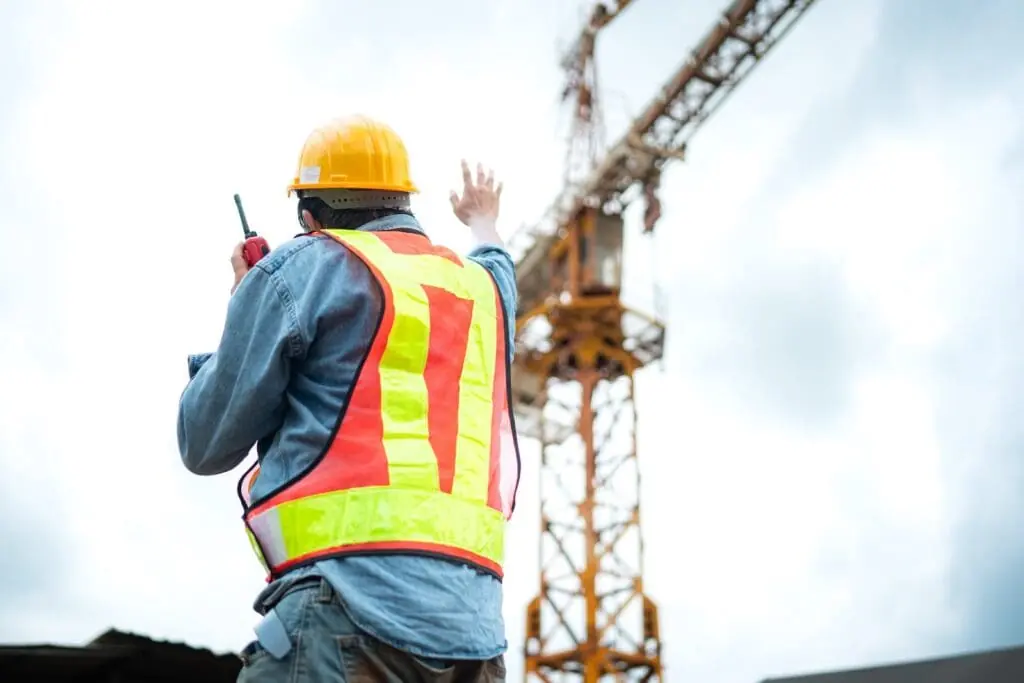
Crane hand signals are one of the most important ways to communicate on any jobsite. One wrong signal can stop a lift, damage equipment, or even lead to serious injury. Clear communication between the operator and signal person keeps everyone safe and helps the job move forward without delays.
Importance of Crane Communication on Construction Sites
Many crane incidents are tied to poor communication. When signals are unclear, rushed, or misunderstood, the risk increases fast. That is why proper training and consistent use of standard crane hand signals matter so much.
At Heavy Equipment Colleges of America (HEC), we focus on real-world training that prepares students to communicate clearly and safely in active work environments. We’ll go over the importance of hand signals for cranes and how they keep job sites safe.
Table of Contents
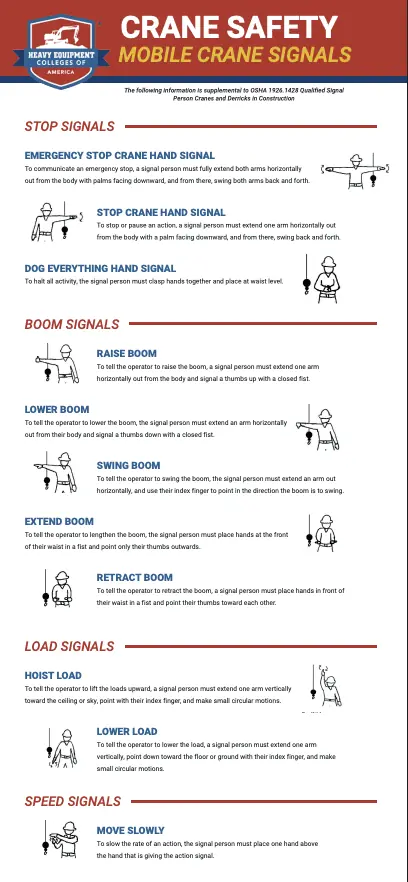
Download a Free .PDF Copy of Standard Crane Signals
Keep a copy of these standard crane hand signals with you on the job site.
Legal Requirements and OSHA Compliance
OSHA requires the use of standardized crane signals on all job sites. These rules are outlined in Subpart CC, which covers cranes and derricks in construction. Only qualified signal persons should direct crane movements, and they must use approved signals that operators can recognize.
Failure to follow these standards can lead to fines, site shutdowns, and serious liability issues. More importantly, it puts workers at risk.
Impact on Project Safety and Efficiency
When signals are consistent, operators can respond quickly and keep operations moving without interruptions. This reduces downtime, prevents costly mistakes, and helps crews stay productive.
Even small delays caused by unclear signals can add up over time. Proper communication helps avoid those setbacks and keeps the entire jobsite running smoothly.
Essential Standard Hand Signals Every Crane Operator Must Know
Every operator and signal person must understand standard crane hand signals before stepping onto a job site. These signals are designed to be clear, simple, and easy to recognize from a distance.
Understanding the different types of equipment can also help you apply signals correctly. Each piece of heavy equipment operates differently, which means the signals may vary slightly depending on the type of crane you’re using.
Basic Movement Signals (Hoist, Lower, Swing)
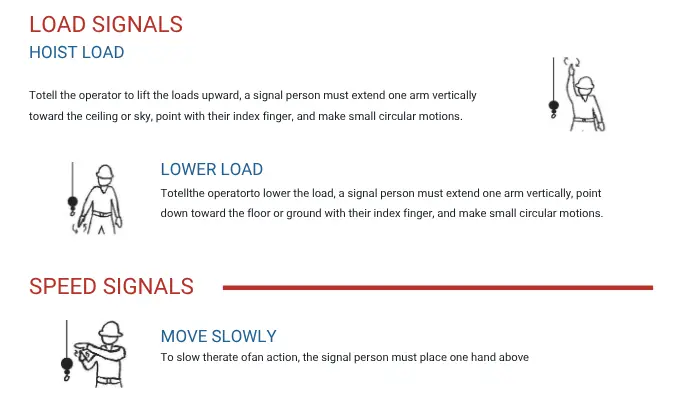
These signals control the most common crane movements:
- Hoist: Arm extended upward, finger pointing in a circular motion
- Lower: Arm extended downward, finger pointing in a circular motion
- Swing: Arm extended outward, pointing in the direction of the swing
Common Mistake: Moving too fast or not holding the signal long enough can confuse the operator. Signals should be steady and easy to read.
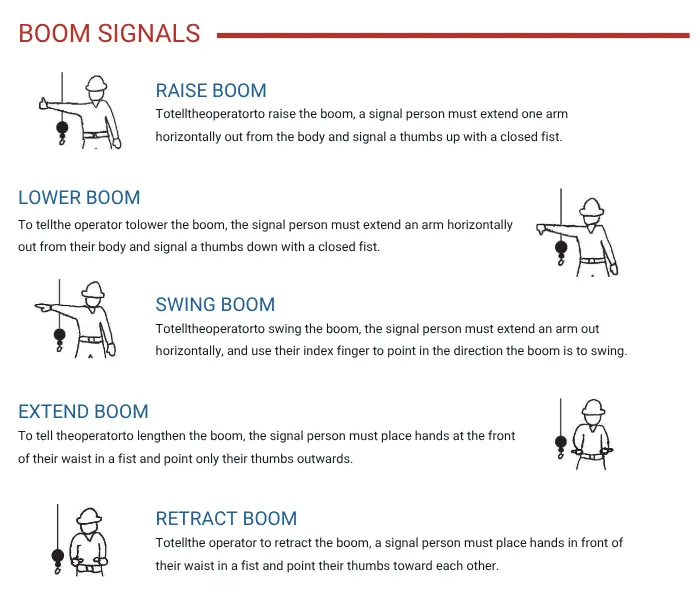
Boom Operation Signals (Raise, Lower, Extend, Retract)
Boom signals control the crane’s reach and positioning:
- Raise boom: Arm extended with thumb pointing upward
- Lower boom: Arm extended with thumb pointing downward
- Extend boom: Both hands moving away from each other
- Retract boom: Hands moving toward each other
Distance and visibility matter here. The signal person should always position themselves where the operator has a clear line of sight.
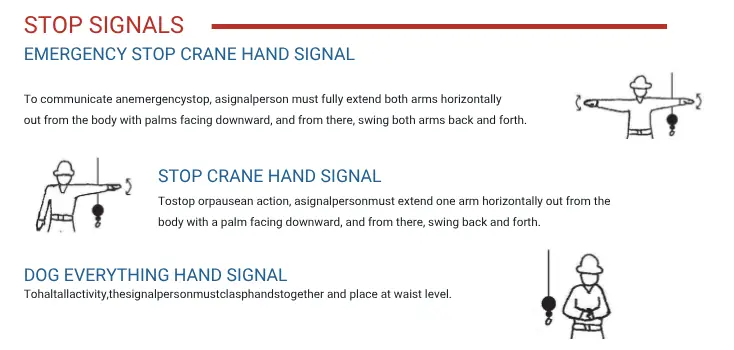
Emergency and Stop Signals
Emergency signals must be clear and immediate to bring work to a complete stop:
- Stop: Arm extended with palm facing downward
- Emergency stop: Both arms extended with palms facing downward
These signals override all other commands. Every worker on-site should recognize them and respond quickly.
Learn How to Start Signaling at Heavy Equipment Colleges of America
If you want to build a career in crane operations, the right training makes all the difference. At Heavy Equipment Colleges of America (HEC), we help students develop real skills that apply on active job sites.
We offer comprehensive operator certification programs, including mobile cranes to tower cranes, so you can find the right program for you.
Apply TodayCommunication Best Practices: The Do's of Crane Hand Signals
Using universal crane hand signals correctly takes more than memorization. It requires planning, teamwork, and attention to detail.
Pre-Operation Signal Review and Team Briefing
Before any lift begins, the team should review all communication procedures. This includes confirming who the signal person is and making sure everyone understands the signals being used. You can keep a copy of a crane operator’s hand signal chart with the standard load charts for easier review.
Qualified signal persons are trained to communicate clearly and follow standard practices, and they’re the only ones who should communicate with the operator. This reduces confusion and keeps operations organized.
Maintaining a Clear Line of Sight and Positioning
The signal person must always stay visible to the operator. Adjust positioning as needed to maintain a clear view at all times.
Environmental factors can affect visibility, including:
- Weather conditions like rain or fog
- Poor lighting during early morning or night work
- Obstacles on the jobsite
If visibility is blocked, the lift should stop immediately. Take a moment to reposition or wait for conditions to clear.
Consistent Signal Execution and Timing
Consistency is key. The operator should never have to guess what a signal means.
Signals should always be:
- Clear and steady
- Held long enough for the operator to respond
- Repeated when necessary
Critical Don'ts - 3 Common Hand Signal Mistakes That Cause Accidents
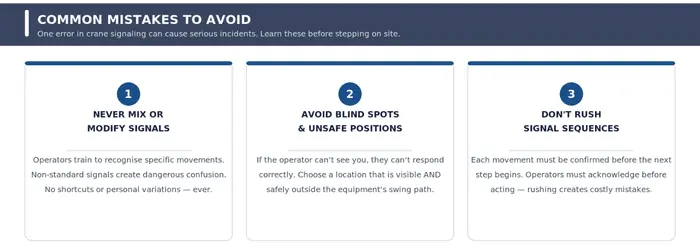
Never Mix or Modify Standard Signals
Using non-standard signals creates confusion. Operators are trained to recognize specific movements, and changing them can lead to dangerous misunderstandings.
Stick to approved signals at all times. Don’t create any shortcuts or personal variations.
Avoid Signaling from Blind Spots or Unsafe Positions
Standing in the wrong place can make signals useless. If the operator can’t see you, they can’t respond correctly.
Unsafe positioning also puts the signal person at risk. Always choose a location that is both visible and safely out of the equipment’s way.
Don't Rush Signal Sequences or Skip Confirmations
Rushing signals can cause errors. Each movement should be clearly communicated and confirmed before the next step begins.
Operators also need to acknowledge signals before acting. This clear back-and-forth communication helps prevent costly mistakes.
How NCCCO Crane Signaling Certification Prepares You to Advance
Learning crane operation hand signals in the field is important, but formal training takes your skills further. NCCCO certification is considered the industry standard. It provides an objective evaluation of your skills and demonstrates to employers that you meet safety and performance expectations.
At Heavy Equipment Colleges of America (HEC), we offer hands-on instruction that prepares students for real job site conditions. Our programs cover:
Advanced Communication Protocols for Complex Lifts
Some lifts require more than basic signals. Complex lifts and movements may involve multiple cranes, tight spaces, or heavy loads.
In these situations, teams often combine hand signals with radio communication. This ensures clear instructions even when visibility is limited.
Multi-Person Signal Coordination
On larger jobsites, more than one signal person may be involved. In these cases, one person must be designated as the primary signaler. They’re the main point of contact and coordinate the signals.
Everyone on the team should know who is in charge of communication during the lift. Clear roles prevent conflicting instructions.
Technology Integration and Backup Communication
Modern job sites often use radios as a backup to hand signals. This adds another layer of communication and improves safety.
However, hand signals are still a key method of communication. Equipment can fail, but visual hand signals are always an option.
Special Environment Considerations
Different work environments may require adjustments:
- Night work requires proper lighting.
- High winds can affect load control.
- Low visibility may require slower movements.
Proper training helps operators and signal persons adapt to these conditions safely.
Get Started with HEC
Our team is here to guide you every step of the way and help you prepare for a future in heavy equipment operation.
Apply online today or get in touch with our admissions representatives and take the first step towards your new career.
Apply TodayFrequently Asked Questions
What are the most important crane hand signals every operator should know?
Are crane hand signals the same for all types of cranes?
Who can give hand signals to a crane operator?
What should you do if a crane operator can't see your hand signals?
How often should crane operators and signalers review hand signals?
Signals should be reviewed before each shift and whenever a new team member joins the operation. It can be helpful to keep a PDF of hand signals for crane operation on the job site to review.